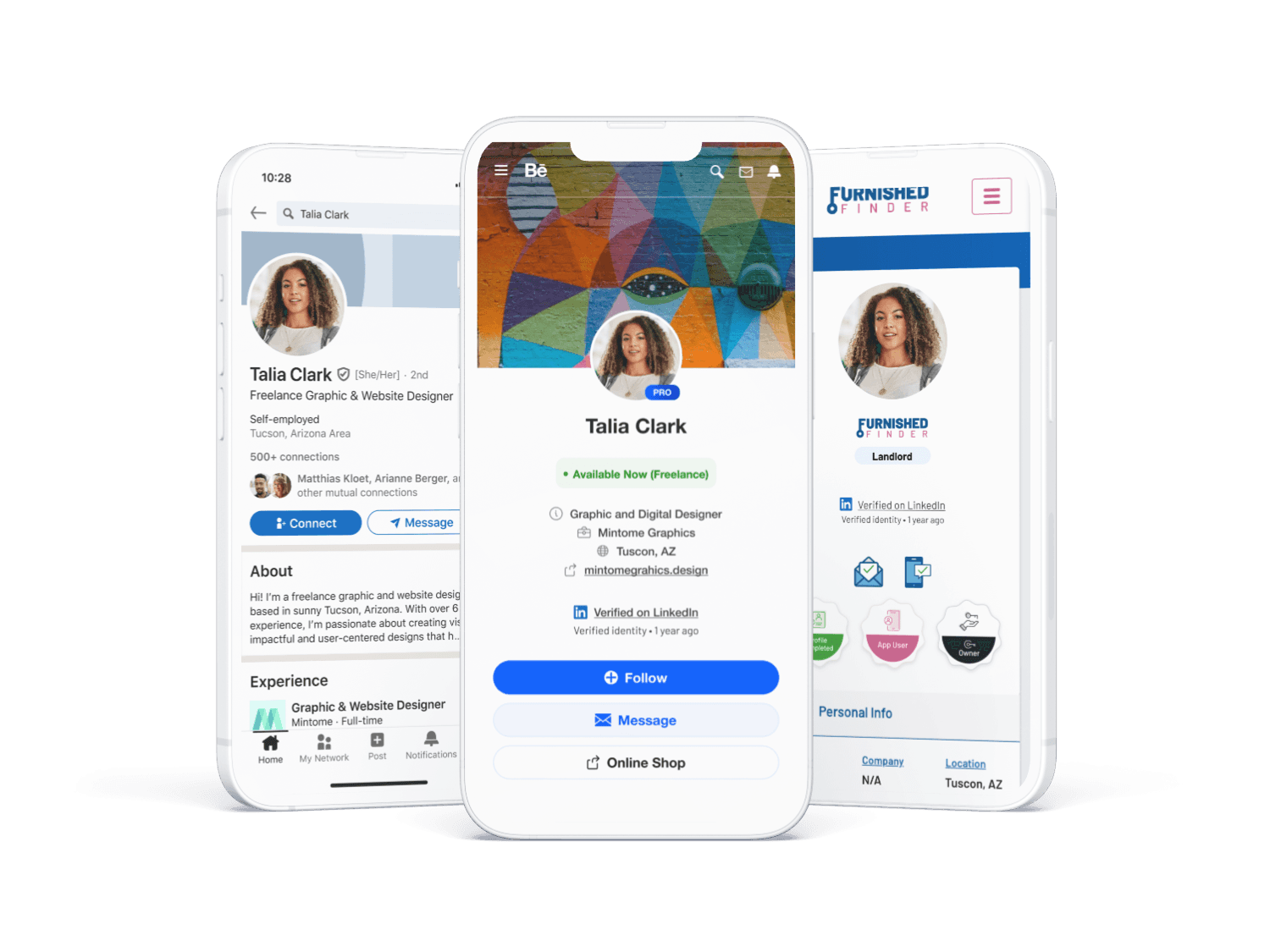
Business & User Impact
Outcome
Opportunity & Approach
Strategy
Opportunity
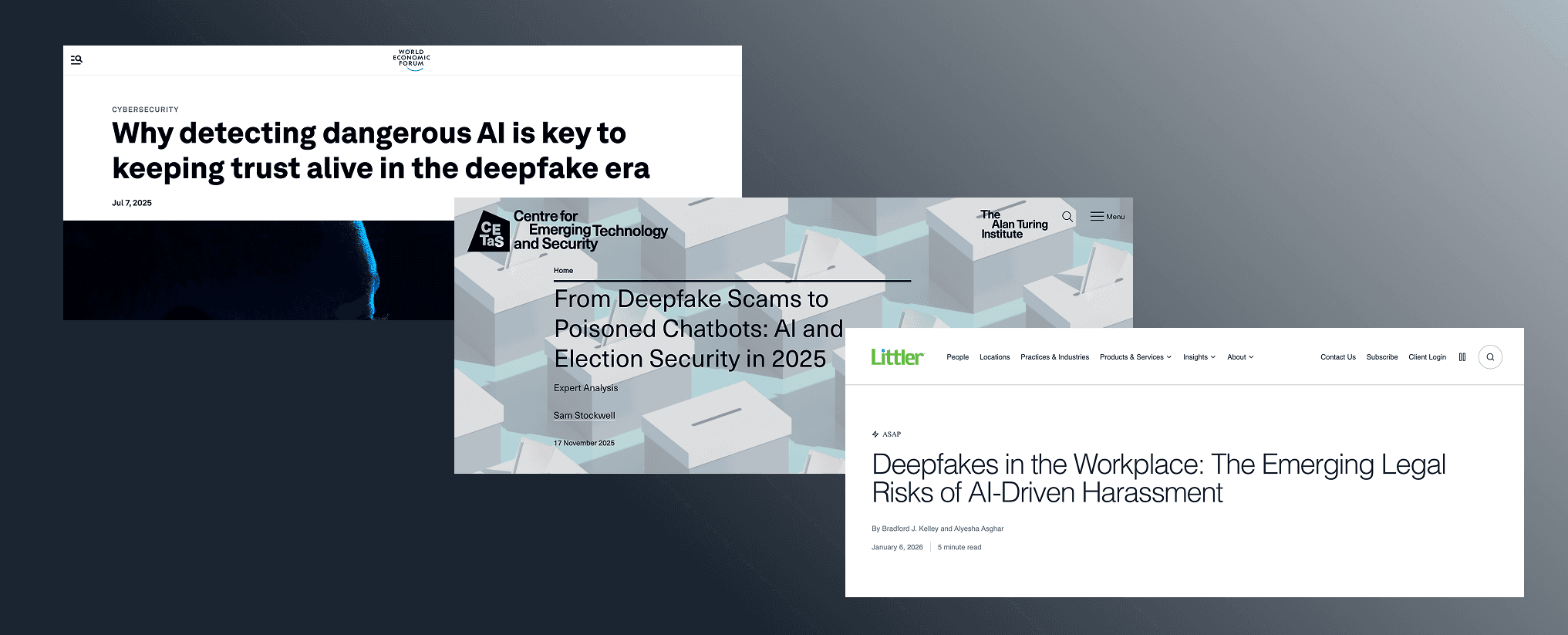
Approach
Keeping verification free for everyone enabled:
Portable verification increased trust and engagement as adoption grew
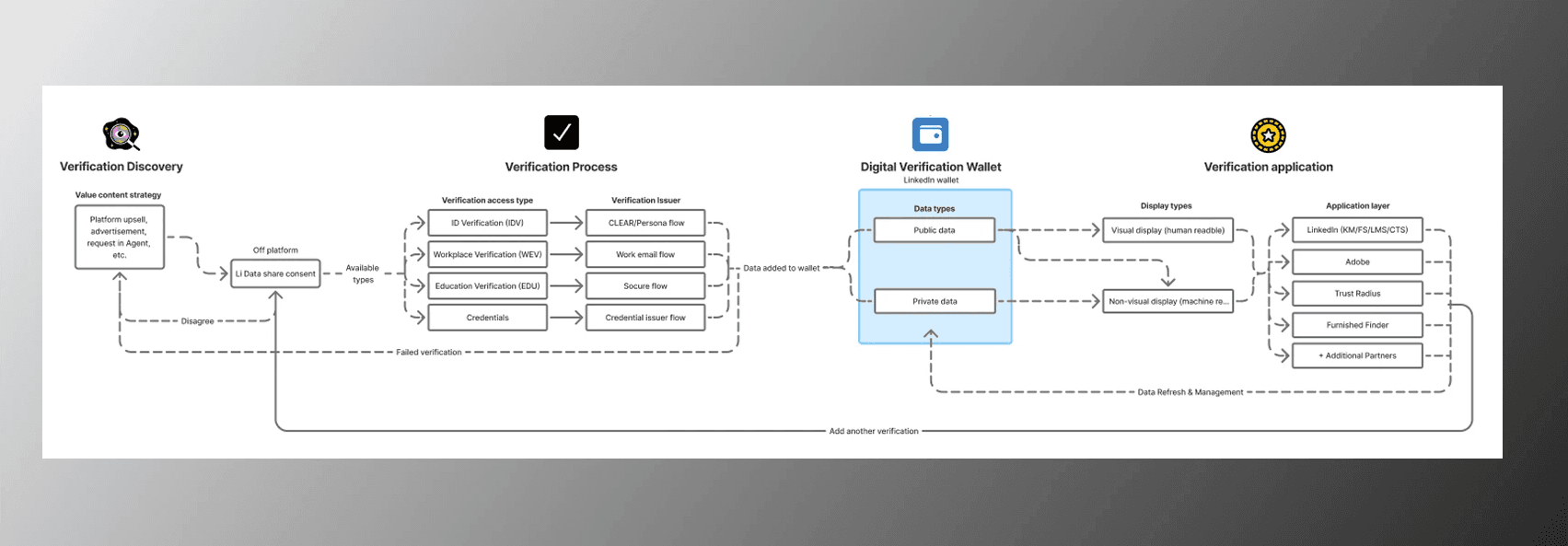
Defensible, partner-aware identity beyond a single platform
A foundation for B2B API monetization once infrastructure was established
UX Research, Risk Workshops
Findings & Risks
Key findings
Risks
Every risk had a designed response. That was the point.
Partners handling identity data crating privacy/regulatory risk
Verification stuck inside LinkedIn limiting platform value
Internal & External Resources
My Deliverables
The work spanned strategy through production. Here's what I owned.
Design & Business
Where it got interesting
Self-Serve vs. Assisted
Tension
Business wanted quality control, Engineering wanted scale, Legal/Brand wanted guardrails.
Decision: Both/Phased
Launch with vetted partners to validate trust patterns, then expand to self-serve once safeguards were established.
Safety Signal vs. Marketing
Tension
Marketing pushed for prominent branding; Legal wanted explicit technical language; partners wanted flexibility.
Decision: Safety Signal
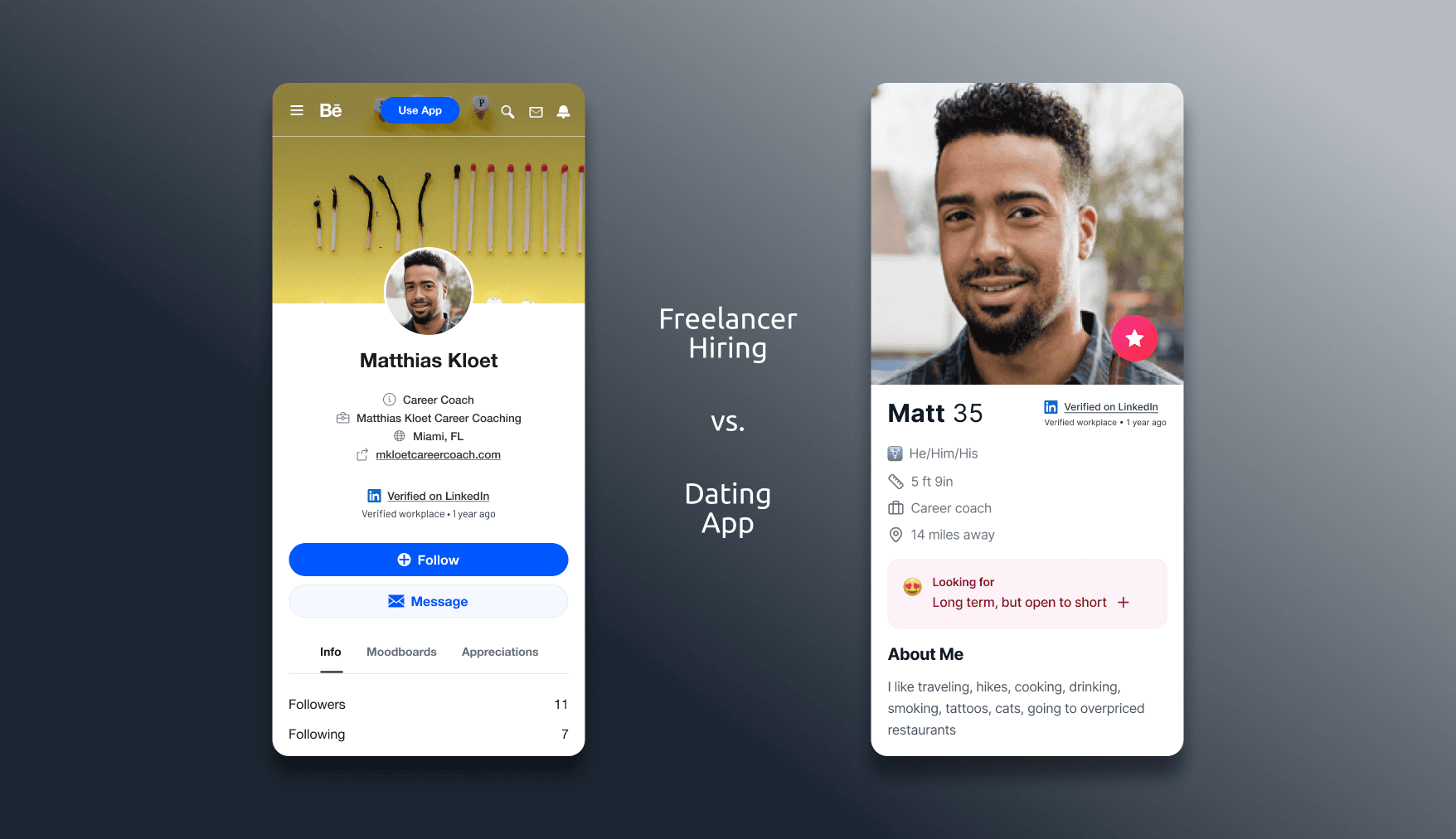
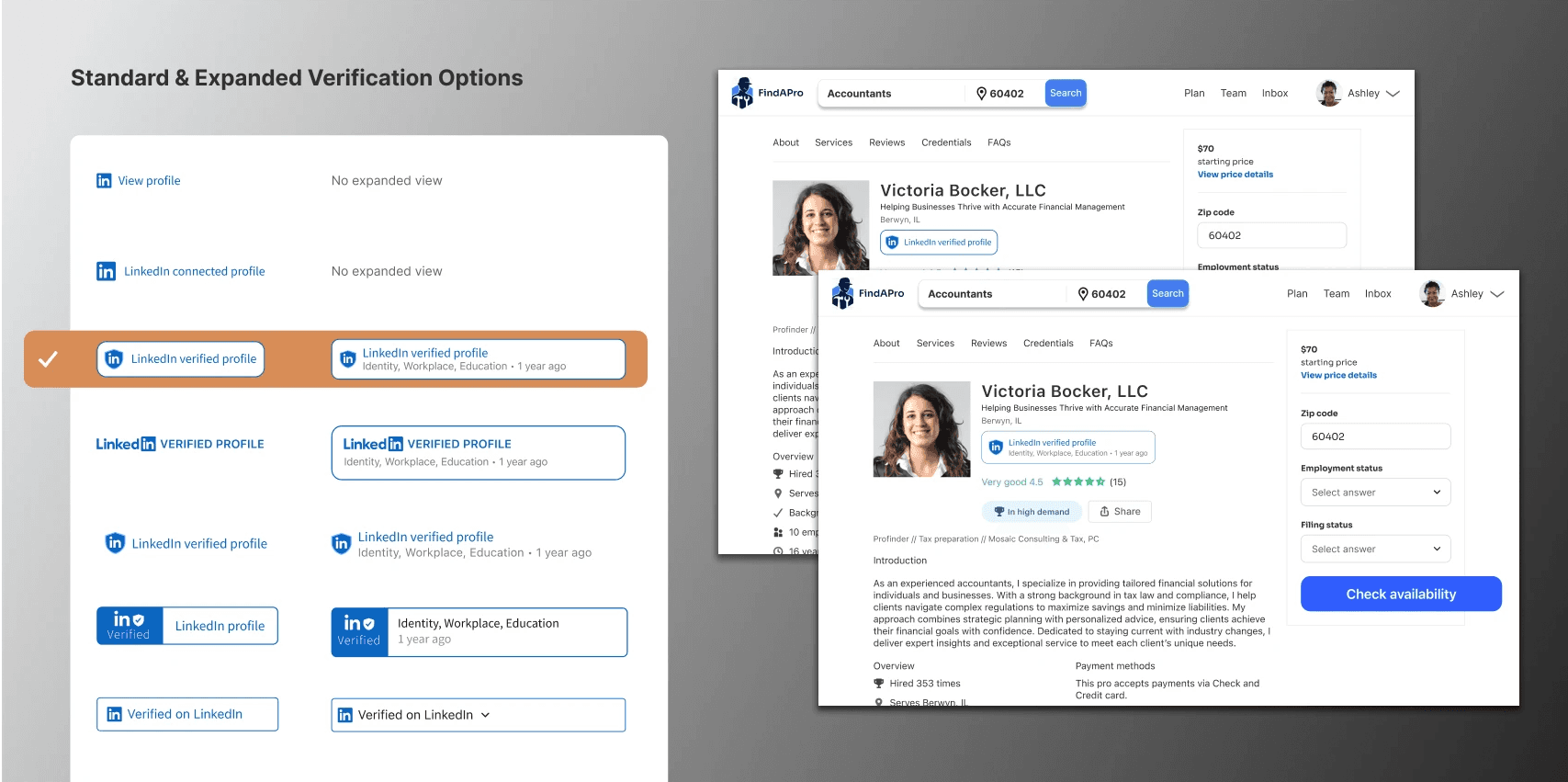
A subtle, credibility-first badge ("Verified on LinkedIn") that behaved like a safety signal, not an ad. Users trusted verification more when it felt protective, not promotional.
Fixed vs. Adaptive Data
Tension
Partners needed different trust depth; a single access level either over-exposed data or limited usefulness.
Decision: Adaptive
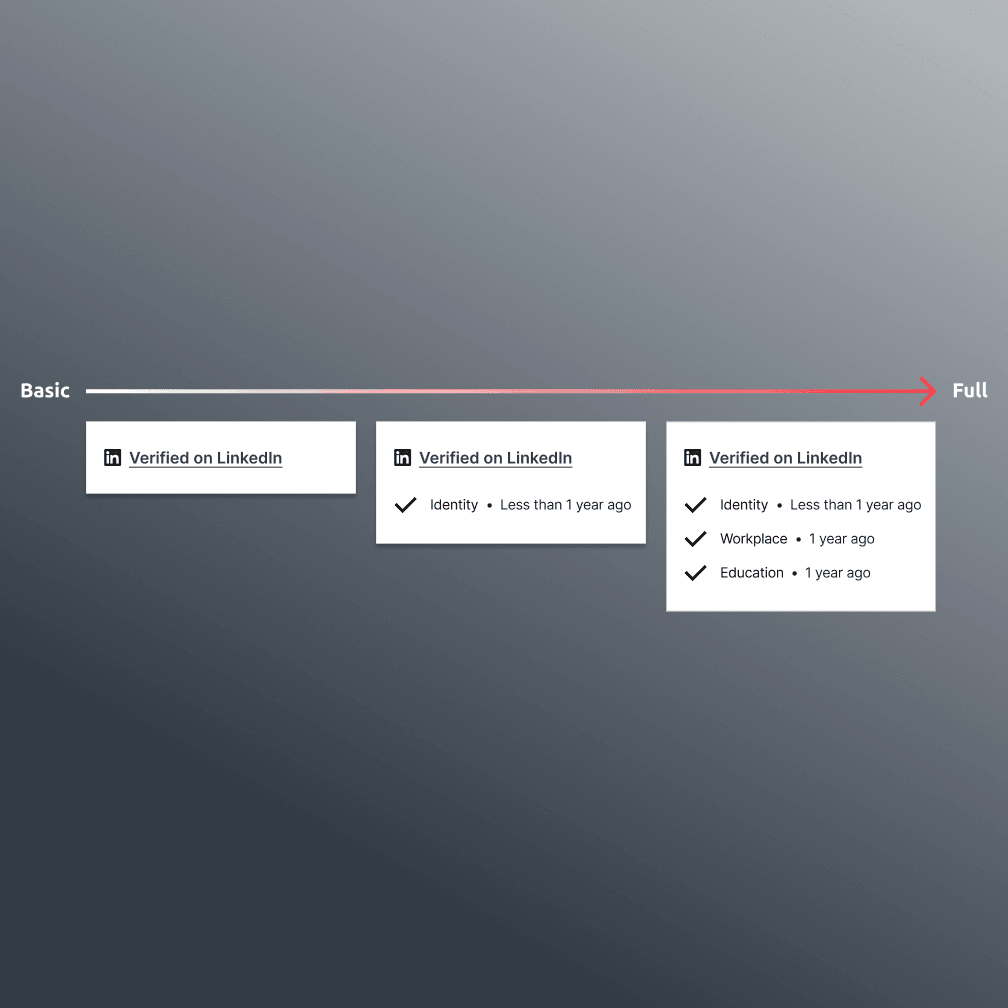
Three-tier consent model adapting verification depth by use case: Basic (yes/no), Standard (verification type), Full (details with explicit consent).
What I did
My Role
Project responsibilities:
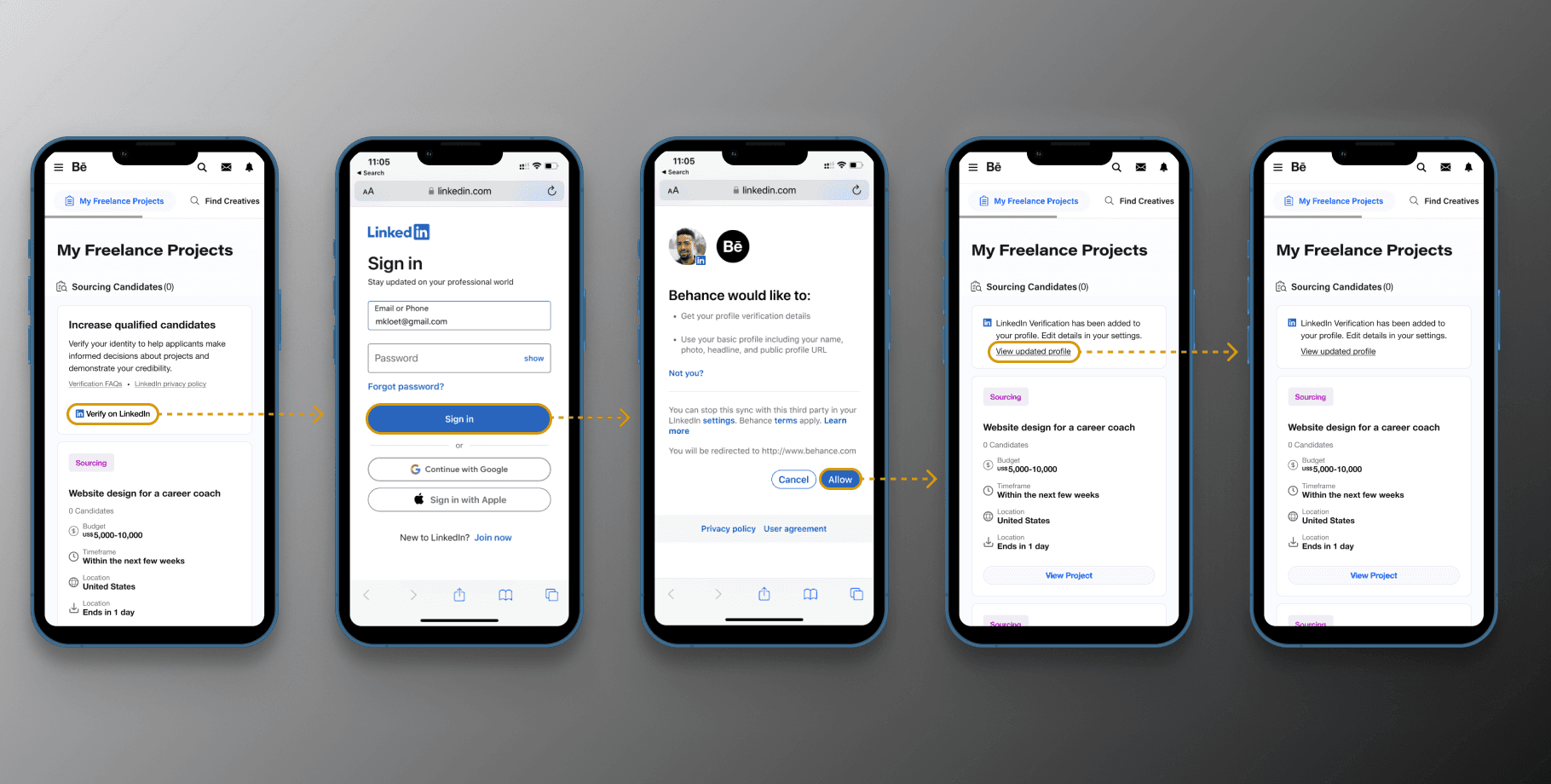
Off-platform verification lead: Strategy, governance, partner experience
Cross-functional orchestration: Aligned engineering, legal, product teams
Business development: Design liaison in partner negotiations, UX as deal differentiator
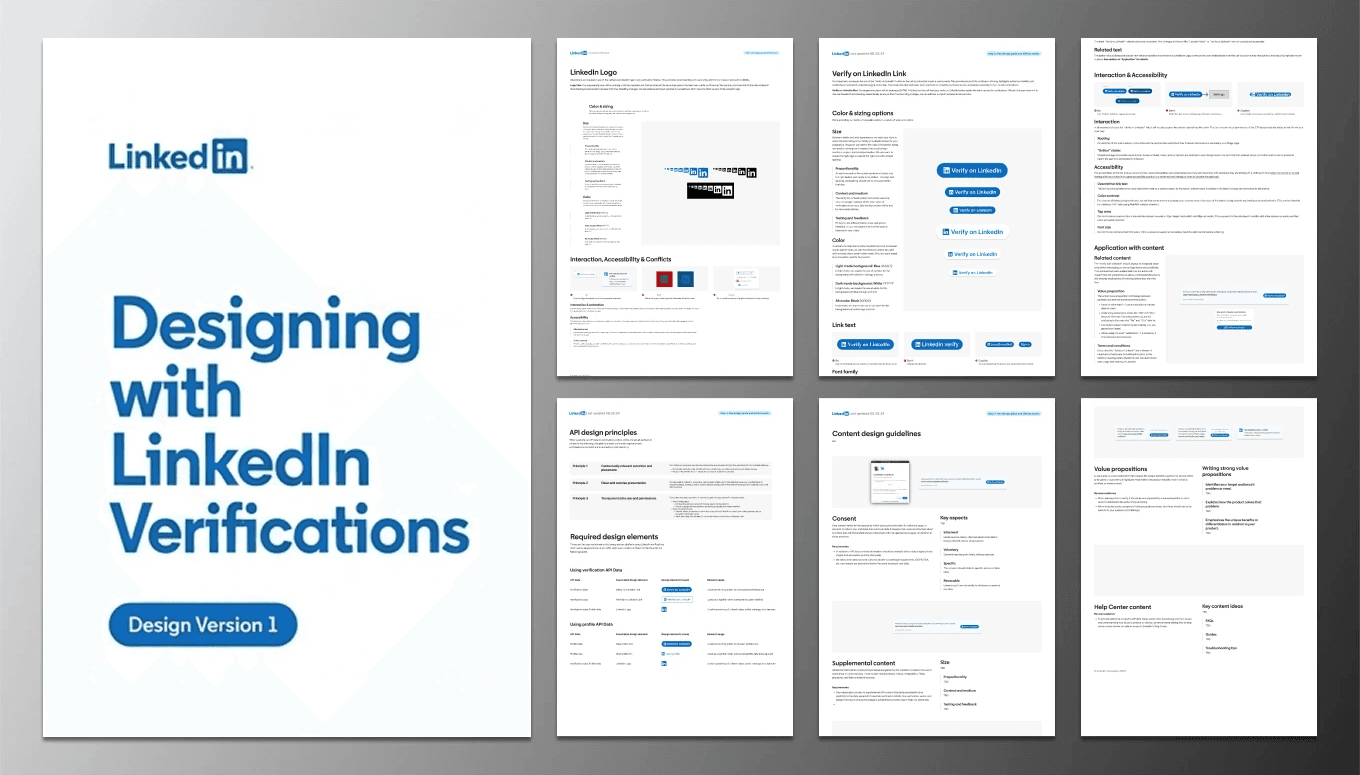
Scaled impact: Partner playbooks adopted across 8+ integrations
Unified strategy: Consolidated on/off-platform verification into single system
At scale, strategy is the most important craft. The badge mattered. The infrastructure mattered more.