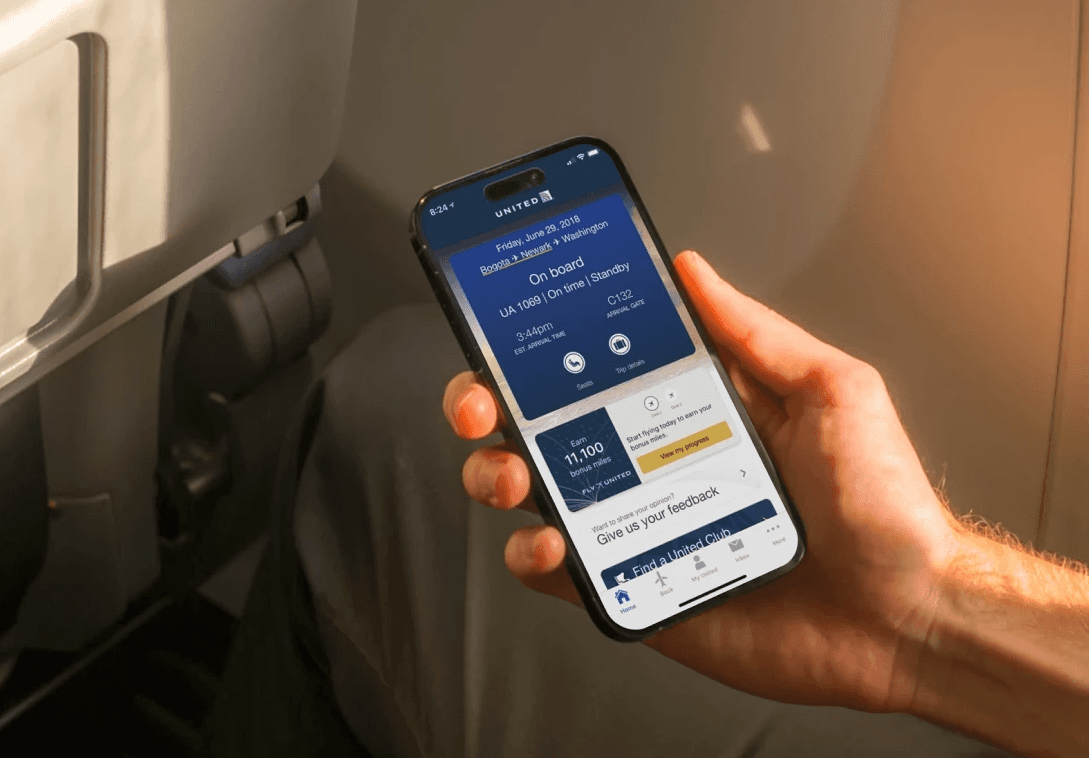
Business & User Impact
Outcome
Opportunity & Approach
Strategy
Opportunity
Approach
To pivot to situational awareness, we needed to:
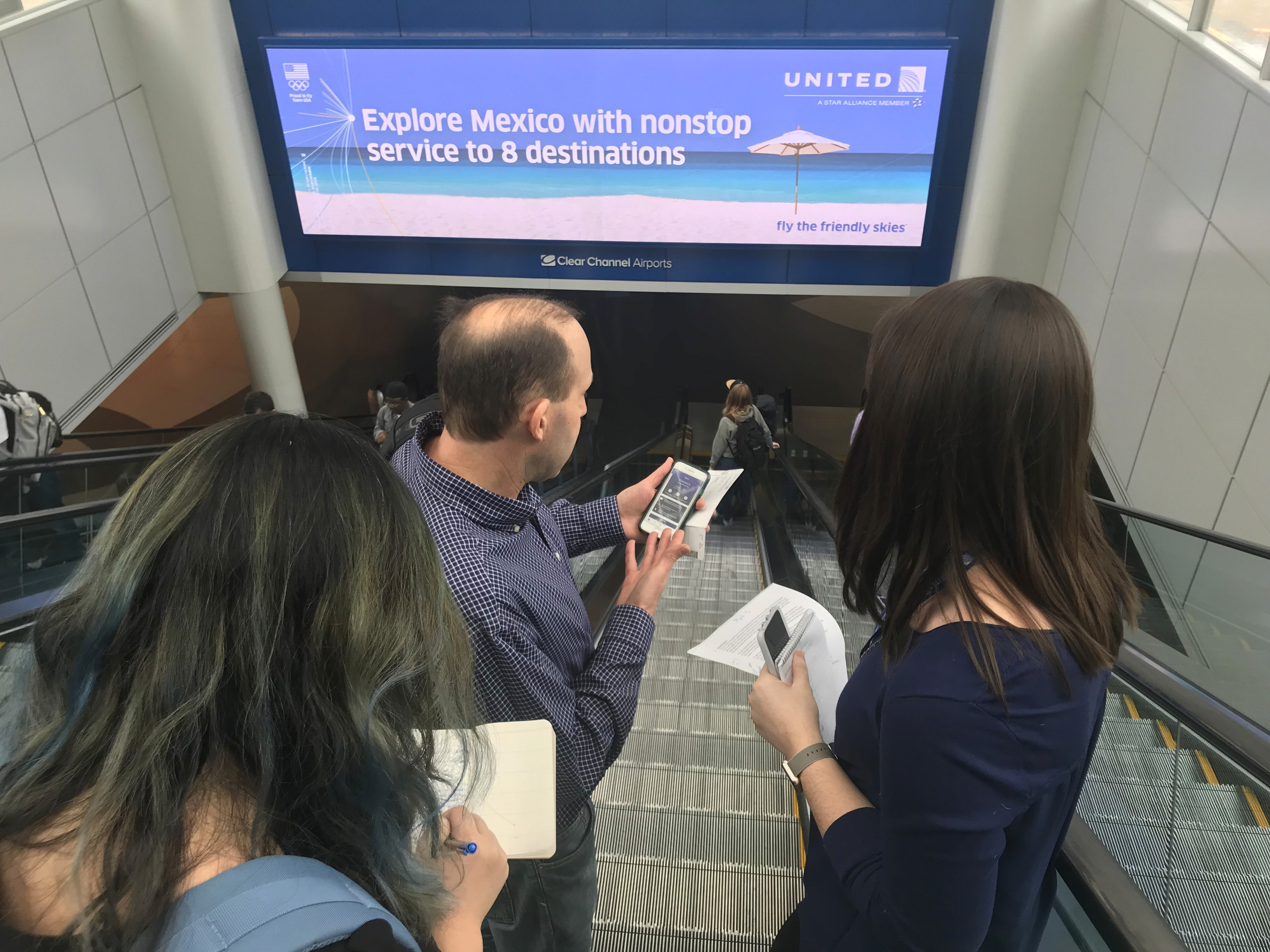
User research, workshops, and principles
Findings & Risks
Key Findings
Addressing Risks
Every risk had a designed response. That was the point.
App or data source failure
Concept failure
Output
My Deliverables
A year of work, 9 designers, one complete app overhaul. Here's what I was directly responsible for.
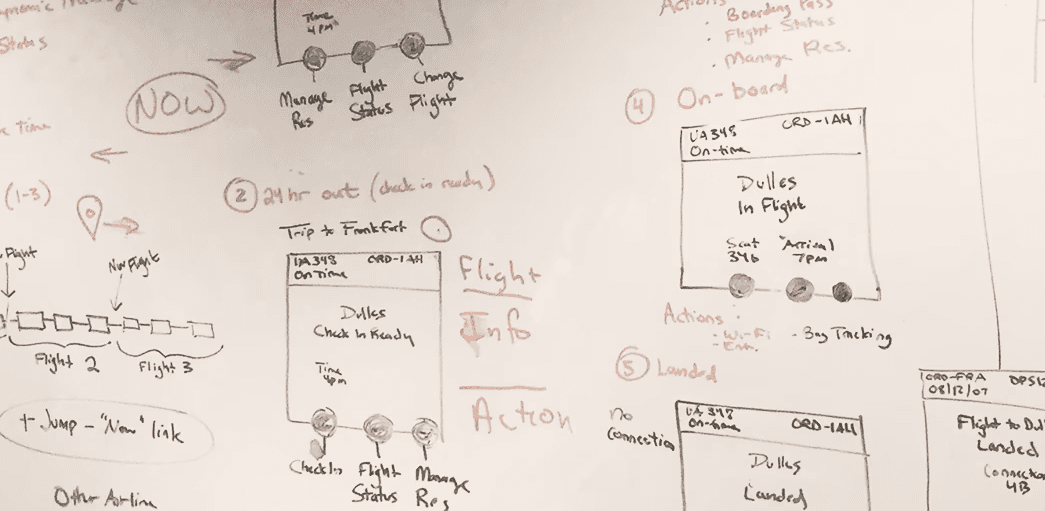
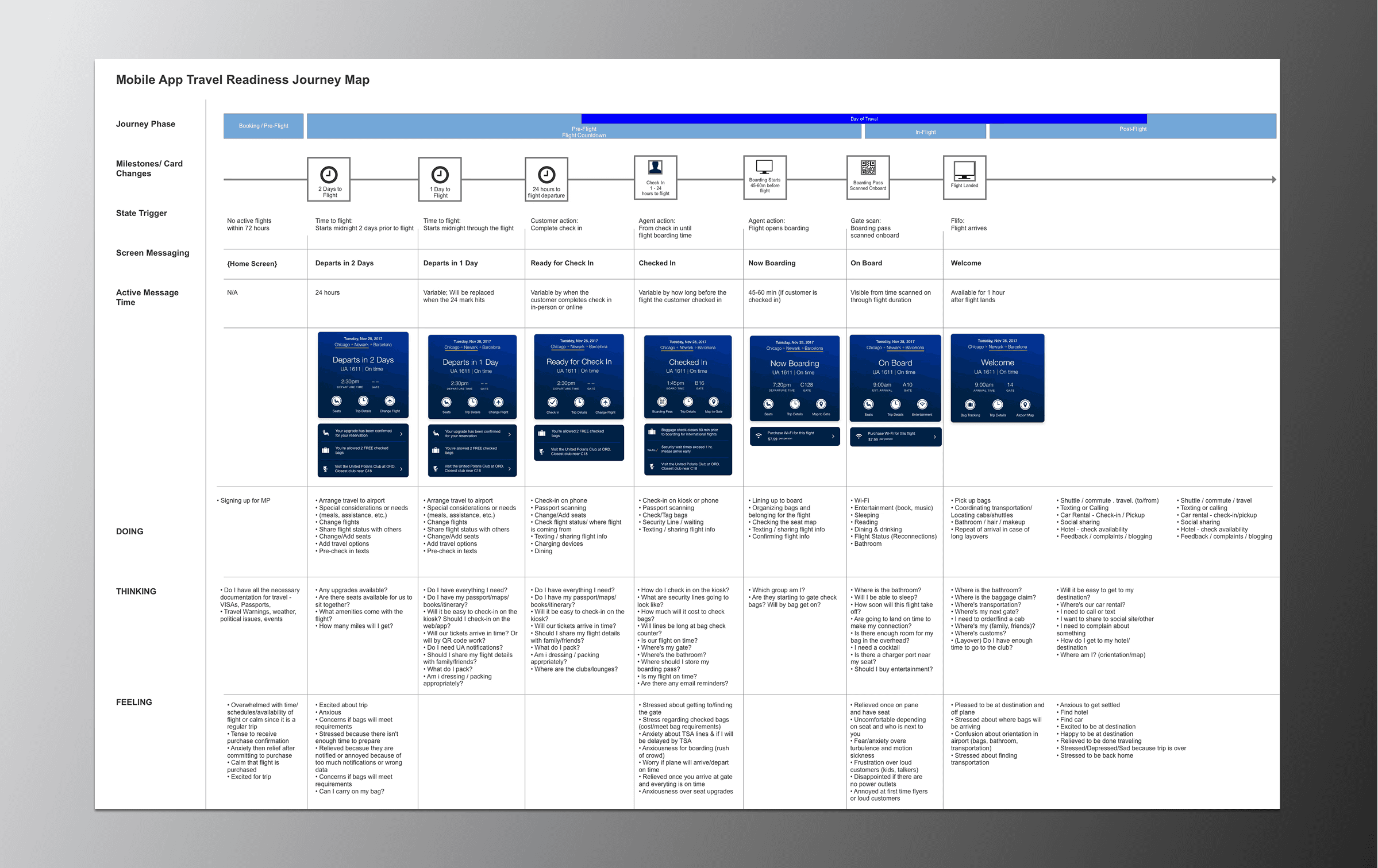
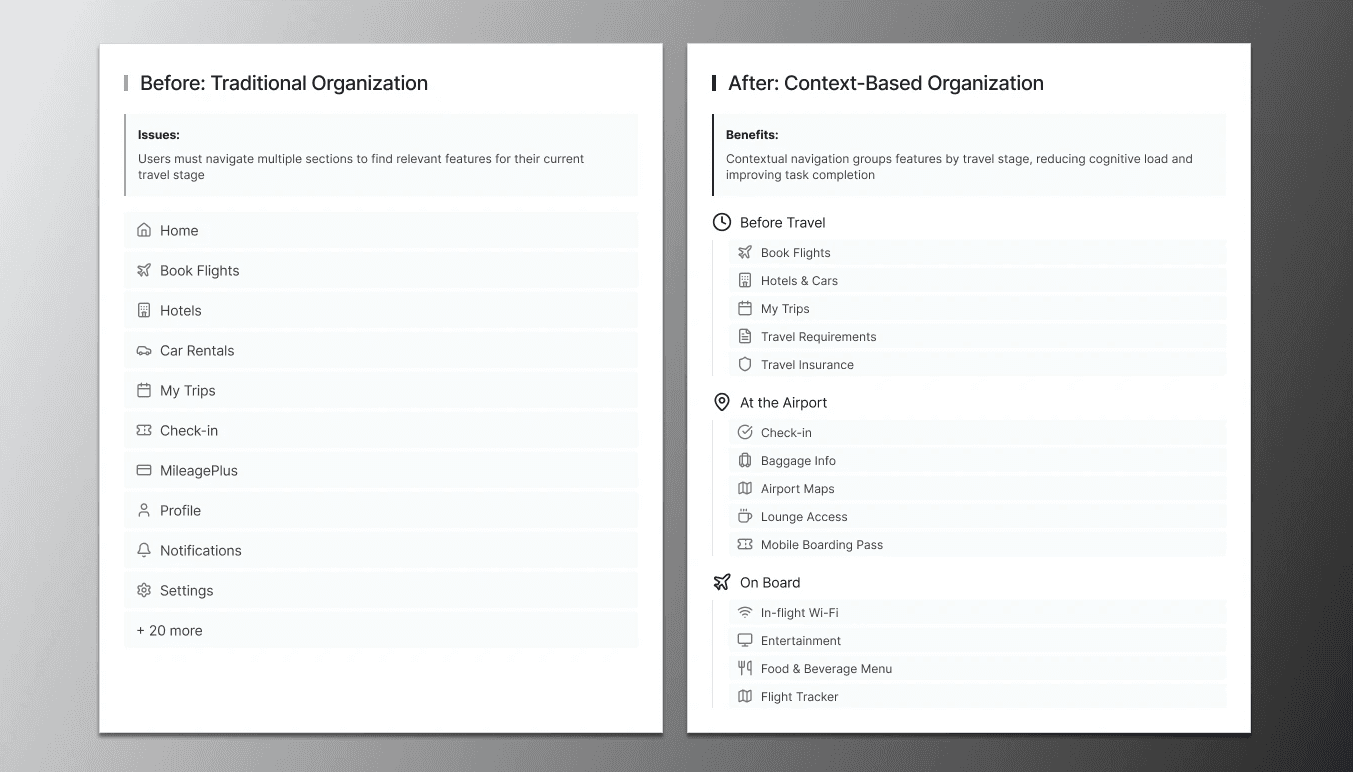
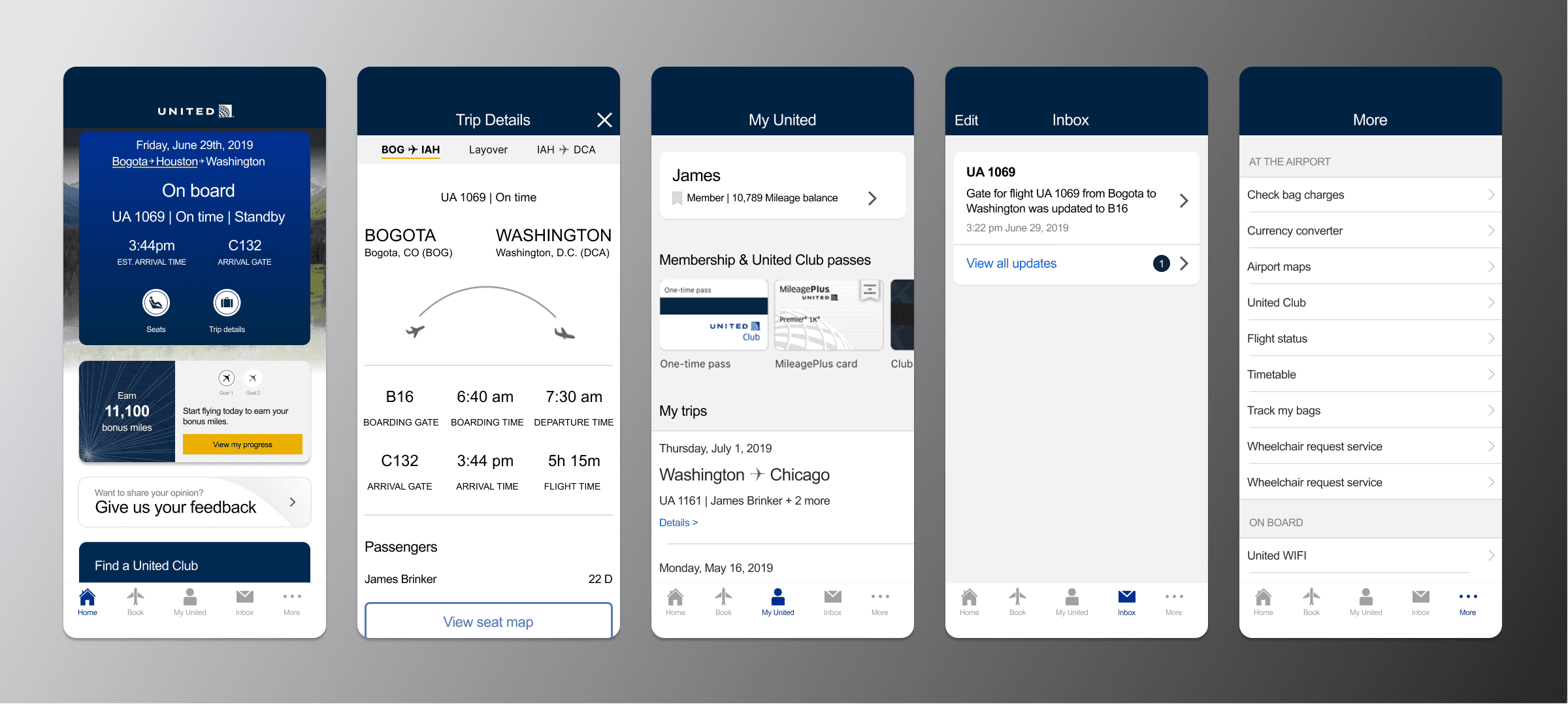
Due Dilligence
Where it got interesting
Clarity vs. monetization
Tension
Business wanted front-and-center ad placements on the homescreen and key app pages to push MileagePlus account sign ups.
Decision: Mixed approach
Removed ads and MileagePlus promotions from the home screen during active trips. Consolidated ads into expected locations. Secured executive buy-in first.
Focus vs. feature visibility
Tension
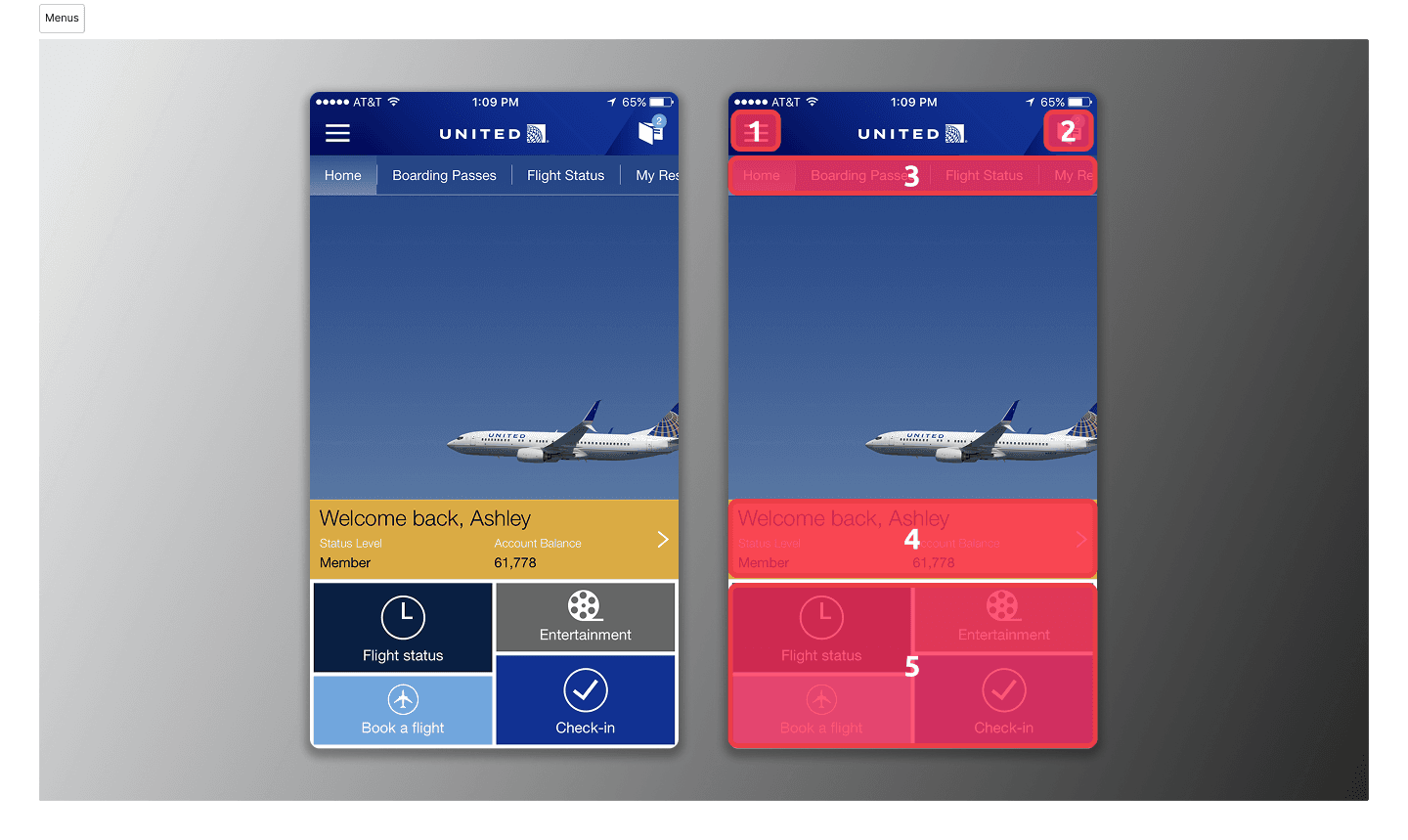
Engineering and business wanted to add layers of movement to access more content from the homescreen in lieu of traditional navigation.
Decision: Focus
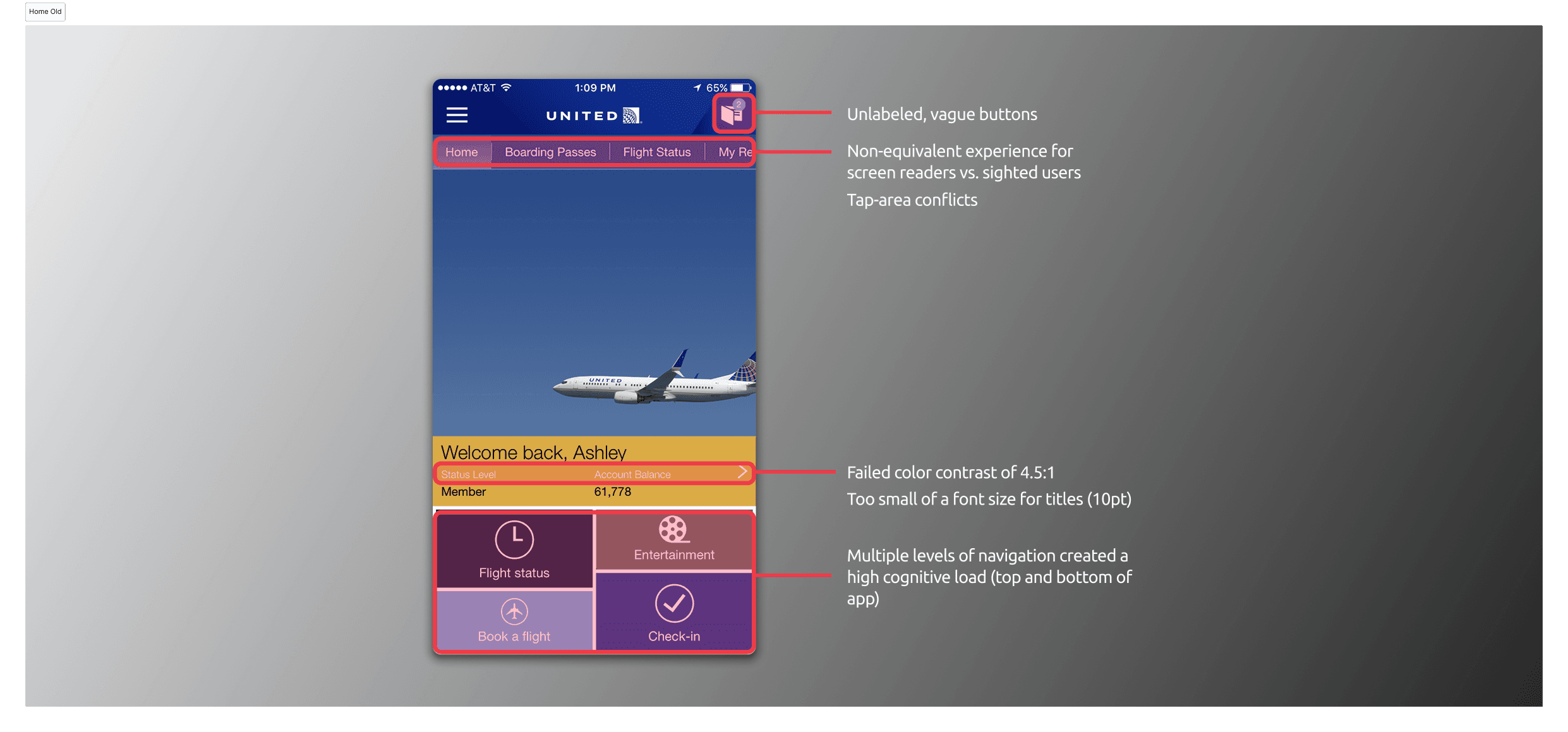
Eliminated multi-directional scrolling and reconsolidated navigation, prioritizing task completion over feature discovery.
Accessibility vs. speed
Tension
Business units prioritized speed to market; legal and brand teams focused on minimum compliance; Design advocated for a broader standard
Decision: Accessibility
Built accessibility into components from the start. Early training on standards eliminated costly remediation.
What I did
My Role
This was the biggest design effort I've led end to end. The scope went from foundational research to shipped product, across a team of 9+ designers, over a year.
Lead designer & manager: Set product direction for moment-based travel experiences
Framework architect: Created moment-based system adopted across United digital products
Cross-functional leadership: Aligned engineering, legal, product through workshops and reviews
Hands-on design: Core flows, interaction models, accessibility standards (WCAG 2.1 AA)
Team oversight: Managed and reviewed 9+ designers across product areas across 1 year + of work
Design for the most stressed user. Everyone else benefits.