Digital Regulation

Designing regulatory systems that scale without breaking products.

Role

Product Designer, Trust & Safety

Challenge

How might we meet DSA requirements while preserving clarity, usability, and trust at scale?

Business goals

Ensure DSA compliance on schedule while minimizing delivery risk, user friction, and long-term operational cost.

Digital Regulation

Designing regulatory systems that scale without breaking products.

Role

Product Designer, Trust & Safety

Challenge

How might we meet DSA requirements while preserving clarity, usability, and trust at scale?

Business goals

Ensure DSA compliance on schedule while minimizing delivery risk, user friction, and long-term operational cost.

Outcome

Met DSA requirements months ahead of deadline Improved clarity and consistency across regulated experiences Reduced escalations and designer rework Established a durable system for future regulations

0

%

Global annual revenue saved

For parent company, Microsoft

0

Business areas coordinated

To ensure design organization compliance

0
0

%

%

Global annual revenue saved

For parent company, Microsoft

0
0

Business areas coordinated

To ensure design organization compliance

Outcome

Met DSA requirements months ahead of deadline Improved clarity and consistency across regulated experiences Reduced escalations and designer rework Established a durable system for future regulations

0

%

Global annual revenue saved

For parent company, Microsoft

0

Business areas coordinated

To ensure design organization compliance

0

%

Global annual revenue saved

For parent company, Microsoft

0

Business areas coordinated

To ensure design organization compliance

Cross-functional

Cross-functional

Cross-functional

Goals

Create alignment at scale

Goal 1

Profile portrait with natural lighting featuring long blonde hair

Protect user experience under regulatory pressure

Goal 2

Profile portrait with natural lighting featuring long blonde hair

Enable designers to move faster (without escalations)


Goal 3

Profile portrait with natural lighting featuring long blonde hair

Future-proof design for upcoming regulations

Goal 4

Profile portrait with natural lighting featuring long blonde hair

Addressing fragmentation

Addressing fragmentation

Addressing fragmentation

Alignment at scale

Outcome

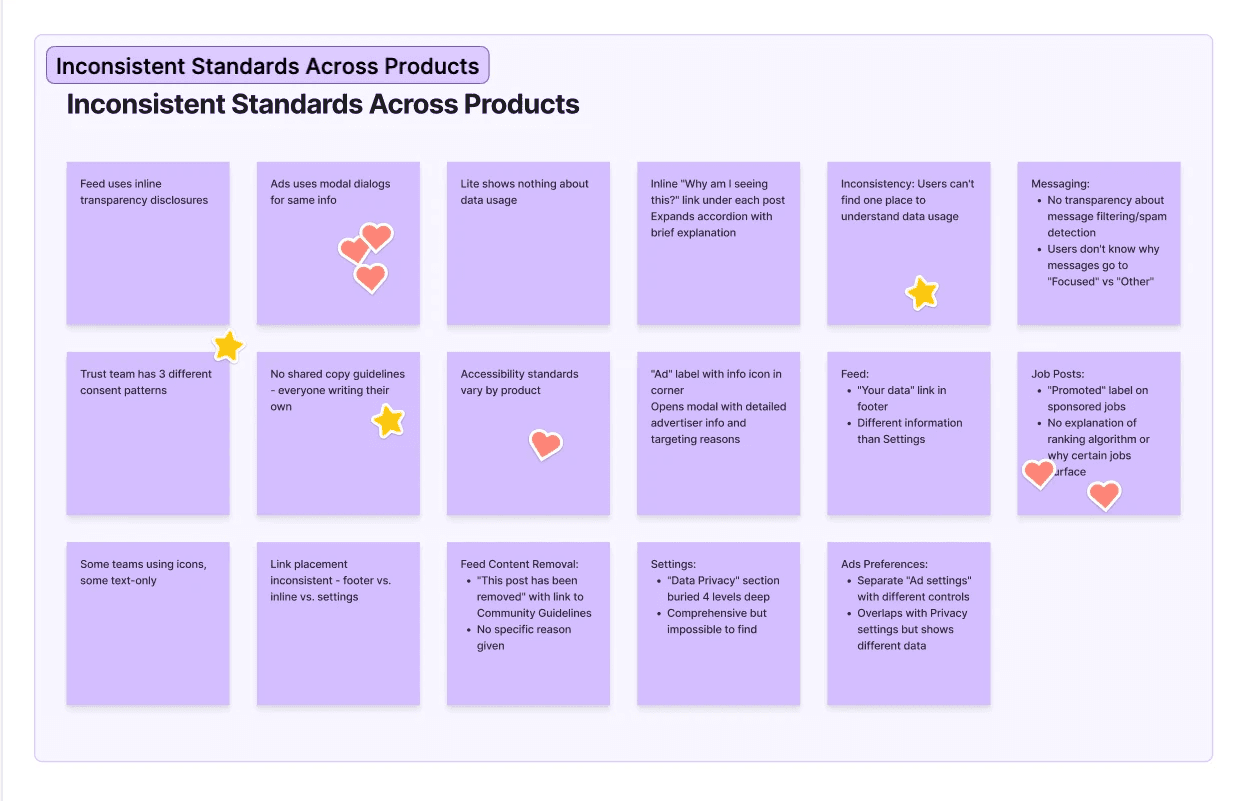
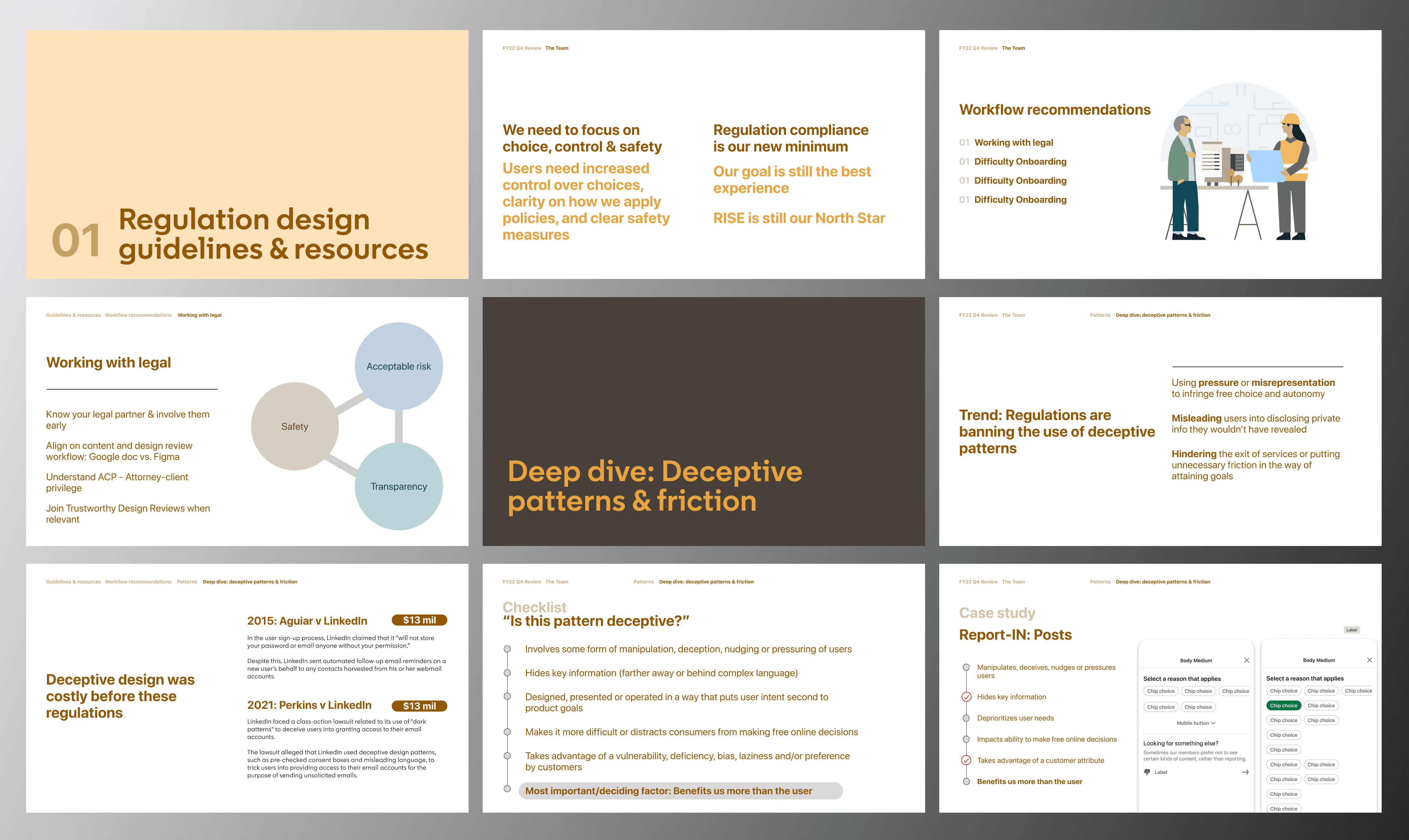
I brought designers together to share wins and failures, identify gaps across experiences, and align on core values. This led to a clear set of DSA design guidelines—covering audience definitions, guest treatment, escalation thresholds, and transparency standards—so teams could design from a shared starting point.

Outcome

I brought designers together to share wins and failures, identify gaps across experiences, and align on core values. This led to a clear set of DSA design guidelines—covering audience definitions, guest treatment, escalation thresholds, and transparency standards—so teams could design from a shared starting point.

Working through regulatory pressure

Working through regulatory pressure

Working through regulatory pressure

Reframing

With limited time for new research, teams struggled to push back on overly complex or legally driven solutions—often at the expense of clarity and usability. Rather than treating the DSA as a checklist, we reframed it around unmet user needs for transparency and safety.

Outcome

We established clear transparency guidelines for copy, created a centralized repository for deeper explanations (reducing on-screen overload), and partnered with UX Research to scope studies using insights from the DSA public consultation. The goal wasn’t just compliance—it was relevance.

Outcome

We established clear transparency guidelines for copy, created a centralized repository for deeper explanations (reducing on-screen overload), and partnered with UX Research to scope studies using insights from the DSA public consultation. The goal wasn’t just compliance—it was relevance.

Looking ahead

Looking ahead

Looking ahead

Future-proofing

Outcome

Knowing the DSA wouldn’t be the last regulation of its kind, I focused on durability. We recommended global design approaches with geo-specific adaptations, defined clearer escalation thresholds to support decision-making, and introduced design oversight earlier in regulatory scoping conversations.

Outcome

Knowing the DSA wouldn’t be the last regulation of its kind, I focused on durability. We recommended global design approaches with geo-specific adaptations, defined clearer escalation thresholds to support decision-making, and introduced design oversight earlier in regulatory scoping conversations.

Going live

Going live

Going live

Delivery

Outcome

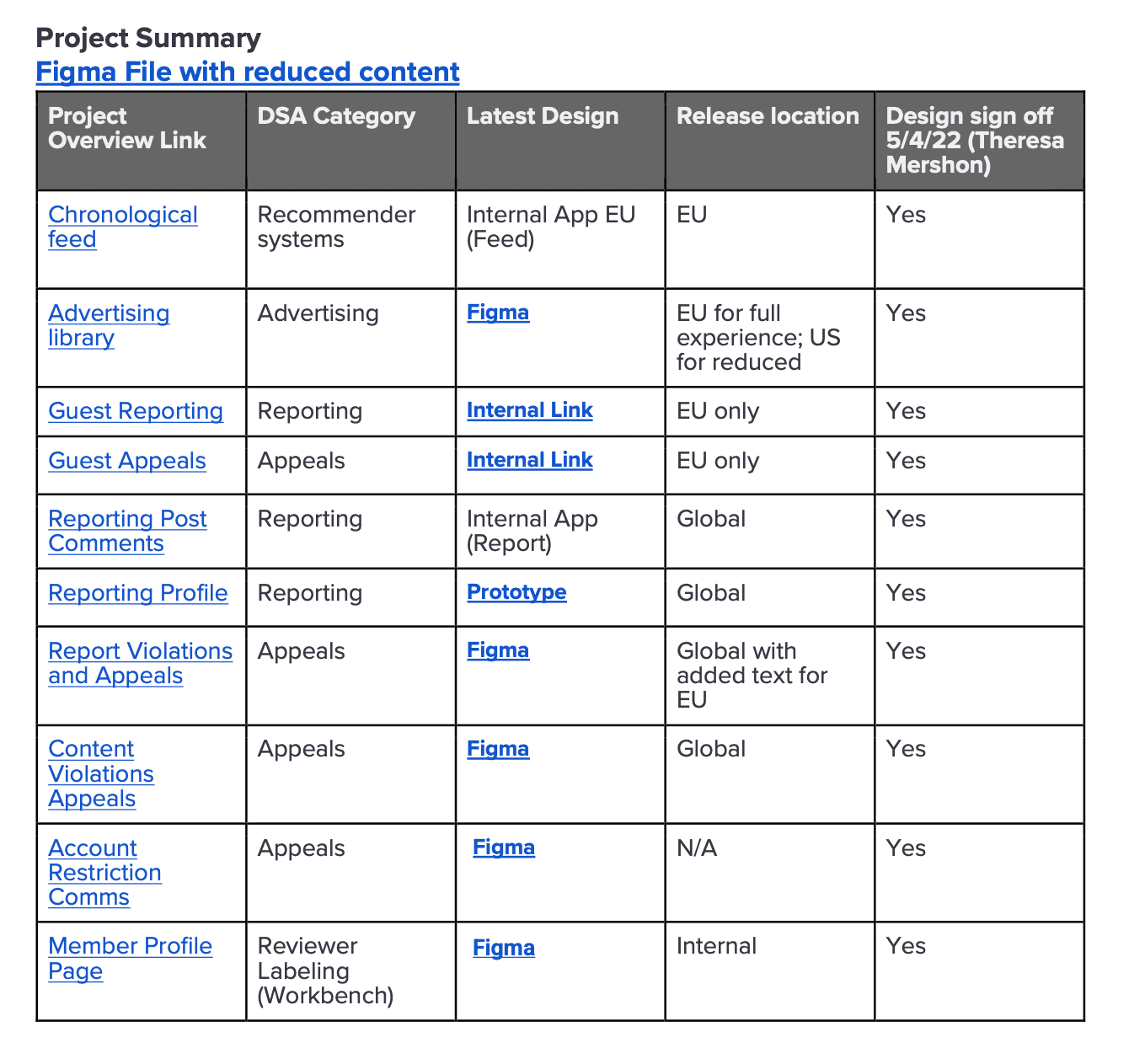
The guidelines enabled teams to meet DSA requirements months ahead of deadline, while improving clarity, consistency, and user trust across experiences. Designers moved faster with fewer escalations, leadership gained confidence in design decisions, and the groundwork was set for future regulatory work—without reinventing the wheel each time. We also proposed ongoing legal office hours, designer onboarding for future phases, and living guidelines that evolve as teams—and regulations—do. Compliance became a system, not a scramble.

Outcome

The guidelines enabled teams to meet DSA requirements months ahead of deadline, while improving clarity, consistency, and user trust across experiences. Designers moved faster with fewer escalations, leadership gained confidence in design decisions, and the groundwork was set for future regulatory work—without reinventing the wheel each time. We also proposed ongoing legal office hours, designer onboarding for future phases, and living guidelines that evolve as teams—and regulations—do. Compliance became a system, not a scramble.

Takeaways

Compliance fails when it’s designed screen by screen

Regulation demands systems, not one-off UI fixes.

Compliance fails when it’s designed screen by screen

Regulation demands systems, not one-off UI fixes.

Designing for the next regulation starts with this one

Future-proofed patterns beat reactive compliance every time.

Designing for the next regulation starts with this one

Future-proofed patterns beat reactive compliance every time.

Transparency needs structure to earn trust


Clarity comes from hierarchy and restraint—not more copy.

Alignment is the real acceleration

A shared approach reduced rework, escalations, and timeline risk.

Alignment is the real acceleration

A shared approach reduced rework, escalations, and timeline risk.

Compliance fails when it’s designed screen by screen

Regulation demands systems, not one-off UI fixes.

Transparency needs structure to earn trust


Clarity comes from hierarchy and restraint—not more copy.

Compliance fails when it’s designed screen by screen

Regulation demands systems, not one-off UI fixes.

Alignment is the real acceleration

A shared approach reduced rework, escalations, and timeline risk.

Designing for the next regulation starts with this one

Future-proofed patterns beat reactive compliance every time.

Alignment is the real acceleration

A shared approach reduced rework, escalations, and timeline risk.

Designing for the next regulation starts with this one

Future-proofed patterns beat reactive compliance every time.

Compliance fails when it’s designed screen by screen

Regulation demands systems, not one-off UI fixes.

Transparency needs structure to earn trust


Clarity comes from hierarchy and restraint—not more copy.

Designing for the next regulation starts with this one

Future-proofed patterns beat reactive compliance every time.

Alignment is the real acceleration

A shared approach reduced rework, escalations, and timeline risk.

Takeaways

Compliance fails when it’s designed screen by screen

Regulation demands systems, not one-off UI fixes.

Compliance fails when it’s designed screen by screen

Regulation demands systems, not one-off UI fixes.

Designing for the next regulation starts with this one

Future-proofed patterns beat reactive compliance every time.

Designing for the next regulation starts with this one

Future-proofed patterns beat reactive compliance every time.

Transparency needs structure to earn trust


Clarity comes from hierarchy and restraint—not more copy.

Alignment is the real acceleration

A shared approach reduced rework, escalations, and timeline risk.

Alignment is the real acceleration

A shared approach reduced rework, escalations, and timeline risk.

Compliance fails when it’s designed screen by screen

Regulation demands systems, not one-off UI fixes.

Transparency needs structure to earn trust


Clarity comes from hierarchy and restraint—not more copy.

Designing for the next regulation starts with this one

Future-proofed patterns beat reactive compliance every time.

Alignment is the real acceleration

A shared approach reduced rework, escalations, and timeline risk.